1

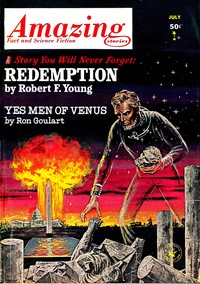
The yes men of Venus — A Reader’s Guide
(0 User reviews)
1490
Project Gutenberg
2023
Not confirmed
Science fiction; Short stories; Humorous stories; Adventure stories
Readers of public-domain and historical texts
Project Gutenberg digital edition
en
Edition facts
Words
6,497
Reading time
29 min
Text sections
1
The source record for The yes men of Venus — A Reader’s Guide measures this digital text at 6,497 words, 29 min estimated reading time, and 1 detected text section.
The text analysis averages about 19.9 words per sentence, while the detected sections provide another way to judge how the source is divided.
Project Gutenberg metadata also associates the work with “Science fiction,” connecting these edition facts with the source record’s subject description.
Source:
Project Gutenberg record #72305
A pastiche of early 20th-century pulp science fiction, this story frames itself as a newly discovered Arthur Wright Beemis tale, completed by Ron Goulart. It follows Hyacinth Robinson, a hero who ended the 4th World War, as he is sentenced to fight in the arena of Maroom and learns of the fiendish Yes Men of Venus.
Editorial Edition Score
4.4/5
★★★★★
★★★★★
Calculated from edition completeness, EPUB availability, text structure and catalogue metadata. Not a user rating.
How this score is calculated
- Description quality20 pts
- Title & short description10 pts
- Source metadata20 pts
- Text length15 pts
- Chapters / structure15 pts
- EPUB file integrity20 pts
Total of 100 points, scaled to a 2.5-5.0 range. Editions with an empty description or a missing EPUB file are not scored.
Edition quality
Public-domain source text
Read the source text
The source text is kept in the dedicated reader, separate from this catalogue record and its commentary.
The story presents itself as a newly completed work by the fictional "venerable fantasist" Arthur Wright Beemis, with an introductory note thanking his estate. This framing device immediately signals a playful homage to early pulp science fiction. The narrator, Hyacinth Robinson, drifts over the Pacific in an atomic Zeppelin after ending the 4th World War, only to be rejected by his beloved's father, a munitions tycoon. The prose is deliberately overwrought, with phrases like "my heart was heavy" and "all my leaden heart could be sure of."
Pastiche and Parody of Pulp Conventions
The text openly mimics the style of early scientifiction, complete with a hero who ends wars with a lucky ray discovery and a love interest named Joanna whose father is a "noted munitions tycoon." The narrator's backstory includes evaporating from a reservoir and drifting to Venus, a nod to Beemis's earlier works like Vandals of Venus. The story also includes a cellmate, Joel Lars, who was raised by great apes (the Boogdabs) and requires therapy to shed the belief he might be an ape. These elements are exaggerated to the point of parody, yet delivered with a straight face.
Narrative Structure and Framing Devices
The story is bookended by an introductory note and a closing note. The introductory note thanks the Beemis Estate and recounts the author's childhood thrill reading Roo-So Of The Jungle. The closing note states that "what transpired next would fill a book itself" and that the agent advised the narrator to write it. This self-referential structure emphasizes the artificiality of the narrative. The story itself breaks off mid-sentence in Chapter 5, with Joel Lars's tale of the Yes Men interrupted by guards dragging him to the arena.
Catalog Subjects vs. Actual Content
The catalog lists "Science fiction; Short stories; Humorous stories; Adventure stories." While the story is indeed a short science fiction adventure, its humor derives from parody rather than outright comedy. The "Yes Men of Venus" are mentioned only briefly as captors of Virl Yank, and the story ends before they appear. The humor is in the deadpan delivery of absurd premises—like the hero ending a world war with a ray that makes gunpowder useless—and the exaggerated pulp style. The adventure is truncated, with the arena fight and the Yes Men unresolved.
Readers should approach this story as a self-aware homage, not a straightforward adventure. The incomplete narrative—breaking off just as the Yes Men are about to be described—is part of the joke. The pleasure lies in recognizing the tropes being sent up: the two-fisted hero, the captive maiden, the backstory of being raised by apes. The catalog subject "Humorous stories" is accurate, but the humor is dry and structural, not slapstick.
I finished The Yes Men of Venus and noticed how it lingered on the quiet moments between pulp-hero bravado, those pauses where old regrets surface. It made me think of another old friend, The band played on — Themes and Context, which found the same ache beneath lively surface. Both somehow felt like letters from a world I used to know.
There are no reviews for this eBook.
There are no comments for this eBook.
Reader reflection
What was your reading experience?
Capture what you thought, learned, and would like to remember.
Your progress
0
/
10
2
Did this book hold your interest?
3
Is this a title you would suggest to others?
4
Did the language feel accessible?
5
How strongly did the book affect you emotionally?
6
How closely did the book connect with your experience?
7
How did the pace of the book feel?
8
How useful were the ideas in this book?
9
What did this book teach you most?
10