1

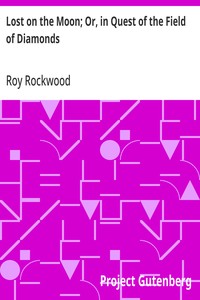
Lost on the Moon; Or, in Quest of the Field of Diamonds — Context and Discussion
(0 User reviews)
1507
Project Gutenberg
2005
Not confirmed
Science fiction; Diamonds -- Fiction; Moon -- Exploration -- Fiction
Readers of public-domain and historical texts
Project Gutenberg digital edition
en
Edition facts
Words
53,043
Reading time
231 min
Text sections
6
Lost on the Moon; Or, in Quest of the Field of Diamonds — Context and Discussion can be approached with a clearer sense of reading commitment from its source measurements: 53,043 words, 3 hr 51 min estimated reading time, and 6 detected text sections.
The text analysis averages about 14.0 words per sentence, while the detected sections provide another way to judge how the source is divided.
Project Gutenberg metadata also associates the work with “Science fiction,” connecting these edition facts with the source record’s subject description.
Source:
Project Gutenberg record #7473
This editorial note examines the narrative voice and pacing in Roy Rockwood's early 20th-century science fiction adventure, focusing on the interplay between technical jargon and colloquial dialogue, and the acceleration of action sequences as the characters journey to the moon.
Editorial Edition Score
4.7/5
★★★★★
★★★★★
Calculated from edition completeness, EPUB availability, text structure and catalogue metadata. Not a user rating.
How this score is calculated
- Description quality20 pts
- Title & short description10 pts
- Source metadata20 pts
- Text length15 pts
- Chapters / structure15 pts
- EPUB file integrity20 pts
Total of 100 points, scaled to a 2.5-5.0 range. Editions with an empty description or a missing EPUB file are not scored.
Edition quality
Public-domain source text
Read the source text
The source text is kept in the dedicated reader, separate from this catalogue record and its commentary.
The opening chapter of Lost on the Moon; Or, in Quest of the Field of Diamonds immediately establishes a dual register: the boys debate the plausibility of a newspaper article written in Martian characters, mixing technical translation doubts with colloquial banter. Jack Darrow and Mark Sampson speak in a natural, informal tone—"Great; isn't it?"—while the narrative itself shifts into precise, technical descriptions of the Cardite motor and speed gauges. This alternation between relaxed dialogue and dense exposition creates a distinctive rhythm that persists throughout the excerpts.
Colloquial Banter vs. Technical Exposition
The dialogue between Jack and Mark in Chapter I reveals a conversational style that grounds the fantastic premise in everyday skepticism. Mark's exclamation, "But think of it!" and his dismissal of the story as "preposterous" contrast sharply with the narrator's later detailed accounts of the Cardite motor's operation. The text moves fluidly between these modes: one moment the boys are debating translation errors, the next the narrative is describing "the hand of the speed indicator" sweeping over the dial. This juxtaposition is not merely stylistic; it reflects the story's core tension between wonder and rational doubt.
Later, when Professor Roumann tests the motor, the dialogue becomes clipped and urgent—"Fifty miles a second," "Seventy-five"—while the prose around it expands into lengthy descriptions of electrical waves and valve wheels. The effect is a layering of voices: the professors' technical commands, the boys' awed exclamations, and the narrator's clinical observations. This polyphony keeps the reader engaged with both the human reactions and the scientific machinery.
Accelerating Pace Through Speed and Danger
The pacing of the narrative is tightly linked to the increasing velocity of the projectile. Early chapters move at a deliberate, conversational speed, but once the Cardite motor is engaged, the prose accelerates. Sentences grow shorter, verbs become more active: "The motor was fairly whining now," "The hand of the dial quivered." The count of miles per second—50, 75, 105, 130, 153—creates a rhythmic escalation that mirrors the characters' rising tension.
This acceleration is punctuated by moments of sudden danger. The excerpt describing the approach of a "big, black stone" introduces a cliffhanger that breaks the technical momentum. The shift from the controlled environment of the engine room to the unexpected obstacle outside changes the pace from a steady climb to a sharp jolt. The narrative thus uses speed not only as a plot device but as a structural element, varying paragraph length and sentence rhythm to keep the reader off balance.
Voice as a Marker of Character and Genre
Each character in the excerpts speaks with a distinct voice that reinforces their role. Jack is the enthusiastic optimist, Mark the cautious skeptic, Professor Roumann the confident inventor, and old Andy Sudds the plainspoken observer. Andy's line, "If we ever hit anything going like that!" is a moment of earthy humor that cuts through the technical jargon. These voices are consistent and help the reader navigate the dense scientific passages.
The narrative voice itself is omniscient but leans toward the boys' perspective, often filtering technical details through their reactions. When Mark "whispered, as if afraid to speak aloud," the narration adopts his hushed tone. This technique humanizes the machinery and keeps the story anchored in the characters' experiences. The blend of colloquial and formal registers is a hallmark of early adventure science fiction, and Rockwood employs it to balance education and entertainment.
Readers may find it useful to note how the author uses speed as both a literal and metaphorical driver of the plot. The technical passages reward careful attention, as they contain clues to the story's internal logic. The dialogue, meanwhile, offers a quick entry point for those less interested in the mechanics. Pay attention to how the narrative voice shifts between these modes—it is the key to the book's rhythm and appeal.
I found myself thinking about that old Moon adventure long after closing it—the strange quiet between the technical talk and the rushing action, like a held breath. It reminded me of how that sequel explores the spaces between those same moments, softer and slower. Sequel — Themes and Context settled with me the same way. Something tender lingers there.
There are no reviews for this eBook.
There are no comments for this eBook.
Reader reflection
How will you remember this book?
Save your reaction, strongest insight, and memorable passage.
Your progress
0
/
10
2
How did the book work for you overall?
3
Is this a title you would suggest to others?
4
What was the reading difficulty like?
5
Did the book deliver what you hoped for?
6
Did this book create an emotional response?
7
How useful were the ideas in this book?
8
Is this a title worth rereading?
9
In one sentence, what did you learn?
10