
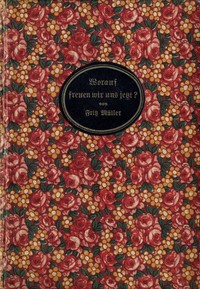
Worauf freuen wir uns jetzt? by Fritz Müller-Partenkirchen
Fritz Müller-Partenkirchen's 1908 novel, 'Worauf freuen wir uns jetzt?', is a quiet snapshot of life in a small Bavarian town just after 1900. The plot is simple: there isn't a grand adventure or a dramatic event. Instead, we spend time with a group of neighbors as they go about their daily lives. There's Herr Beck, the shopkeeper whose business is steady but never exciting; Fräulein Anna, the young woman who wonders if marriage is her only future; the schoolteacher, Herr Leitner, who feels his best lessons are behind him; and old Herr Sommer, who has all the time in the world and doesn't know what to do with it.
The Story
The story unfolds over a single, uneventful season. We see these characters in their shops, homes, and the local pub. Conversations revolve around the weather, small town gossip, and minor annoyances. But beneath the surface, a shared quiet question lingers. Each character has reached a plateau. They've met their basic needs and settled into their roles. The initial struggle is over, and they're left with a comfortable but faintly unsettling calm. The book's tension comes from watching them bump against the walls of their own routines, subtly wondering if this is all there is.
Why You Should Read It
What struck me is how relatable this century-old story feels. Müller-Partenkirchen wasn't writing about epic heroes; he was writing about us. That feeling of 'What now?' after finishing a big project, or the mild anxiety of a too-quiet Sunday afternoon—he captures it perfectly. The characters aren't depressed; they're just... adrift in their own settled lives. His writing is clear and observational, finding small moments of humor and pathos in everyday interactions. You come to care for these people not because they do great things, but because their quiet struggles are so recognizably human.
Final Verdict
This book is a hidden gem for readers who love character-driven stories and slices of historical life. It's perfect for anyone who enjoys authors like Jane Austen (for the social observation) or later writers like Penelope Fitzgerald, but set in a very specific German context. If you need fast plots and big twists, look elsewhere. But if you're in the mood for a thoughtful, slow-paced, and beautifully observed novel about the universal search for purpose in the ordinary, this little book offers a surprisingly poignant and timely read. It's a gentle reminder that the question 'What's next?' is ageless.
This text is dedicated to the public domain. Thank you for supporting open literature.
John Wright
7 months agoI didn't expect much, but the depth of research presented here is truly commendable. I would gladly recommend this title.
Aiden Hill
5 months agoAs someone who reads a lot, the emotional weight of the story is balanced perfectly. Thanks for sharing this review.
Robert Jones
1 year agoTo be perfectly clear, the storytelling feels authentic and emotionally grounded. I couldn't put it down.
Betty Thompson
1 year agoGreat reference material for my coursework.





Joseph Miller
2 months agoI've gone through the entire material twice now, and the logic behind each conclusion is easy to follow and verify. This should be on the reading list of every serious professional.