
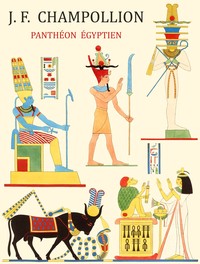
Panthéon égyptien : Collection des personnages mythologiques de l'ancienne…
Let's be clear: this isn't a novel. There's no single plot. Instead, think of 'Panthéon égyptien' as the ultimate character guide for the world's longest-running spiritual drama. Champollion organizes the vast Egyptian spiritual universe, presenting its gods, goddesses, and mythical beings not as random idols, but as a connected family with roles, relationships, and stories.
The Story
Champollion builds the book like a cosmic family tree. He starts with the big players—the creator gods like Ptah and Ra—and walks us through the generations. He lays out the famous myths: the murder of Osiris by his brother Set, Isis's desperate search to reassemble her husband, and Horus's eventual battle for vengeance and kingship. He doesn't stop with the headline acts. He introduces the lesser-known deities of local towns, the personifications of concepts like Ma'at (truth/order), and the strange composite creatures. The 'story' is how all these pieces fit together to explain everything from the sun's journey to the rituals of burial, creating a complete picture of how the Egyptians saw their universe.
Why You Should Read It
Reading this feels special because you're seeing the culture through Champollion's eyes right after his breakthrough. His excitement is palpable. He's not just repeating old tales; he's using the language itself as evidence. When he describes Anubis, the jackal-headed guide of the dead, he can point to the hieroglyphic spelling and explain the nuances the symbols carry. This connection between word and image makes the gods feel real and rooted. You get a sense of a living belief system, one that was logical and deeply woven into daily life. It transforms gods from strange statues into key parts of a world's operating manual.
Final Verdict
This book is perfect for history buffs and mythology lovers who want to go beyond a simple list of gods and get into the 'why' behind them. It's for anyone who has visited a museum, seen a sarcophagus, and left wanting to know more about the stories painted on it. Because it's a 19th-century work, the prose can feel formal at times, but the ideas are thrilling. If you want to understand ancient Egypt on its own terms, straight from the scholar who first heard its voice again, this foundational text is an unforgettable journey.
The copyright for this book has expired, making it public property. It is available for public use and education.



Joseph Lewis
7 months agoAfter hearing about this author multiple times, it creates a vivid world that you simply do not want to leave. I will read more from this author.