
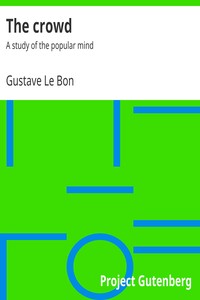
The crowd : A study of the popular mind by Gustave Le Bon
Published in 1895, Gustave Le Bon's The Crowd: A Study of the Popular Mind isn't a novel with a plot, but an investigation into a powerful force. Think of it as a field guide to group psychology written long before the term existed. Le Bon watches the political upheavals and social transformations of his era—the French Revolution, rising socialism, volatile stock markets—and asks a simple, brilliant question: Why do rational individuals become irrational en masse?
The Story
Le Bon doesn't tell a story so much as he builds an argument. He starts by defining a 'psychological crowd'—any gathering where people lose their sense of self and adopt a collective mentality. He then walks us through the rules of this strange new mind. He says crowds are impulsive, easily swayed by images and simple slogans, and crave a strong leader. They don't reason; they feel. They are incredibly suggestible, like someone under hypnosis. Individual intelligence and responsibility dissolve, replaced by a primitive, emotional groupthink. Le Bon uses examples from history and current events of his time to show this mechanism in action, painting a picture of how ideas spread like contagion and how leaders can wield almost magical influence over the masses.
Why You Should Read It
You should read this not because Le Bon is always right (he's often bleak and his views on certain groups are products of a biased time), but because he's startlingly perceptive. Reading this in the 21st century is a wild experience. You'll see his ideas reflected in every Twitter storm, viral challenge, and political rally. When he talks about crowds being influenced by 'images' and 'repetition,' you'll think of memes and slogans. His description of the crowd's need for a heroic leader echoes in modern cults of personality. It gives you a foundational language for phenomena we live with daily. It’s also a bit of a wake-up call, encouraging you to think critically about when you might be slipping into that crowd mentality yourself.
Final Verdict
This book is perfect for anyone curious about psychology, history, politics, or modern media. It's essential reading for understanding propaganda, social movements, and the mechanics of public opinion. If you enjoy books like Thinking, Fast and Slow or Influence, this is their great-great-grandfather. Be prepared for some dated and disagreeable parts—read it not as absolute truth, but as a provocative, foundational text that helps explain why people act so differently in a pack. It’s a short, dense, and genuinely fascinating look into the engine room of society.
No rights are reserved for this publication. Knowledge should be free and accessible.
Mark Brown
5 months agoEnjoyed every page.
Emily Anderson
1 year agoEnjoyed every page.

Carol Lopez
3 months agoEnjoyed every page.