
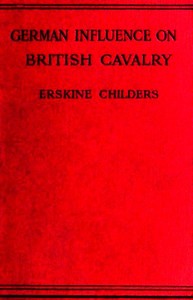
German Influence on British Cavalry by Erskine Childers
Let's set the scene. It's the early 1900s. The British Army, especially its glamorous cavalry, is the pride of the Empire. But behind the polished boots and splendid uniforms, there's a quiet crisis. Everyone knows warfare is changing, but no one can agree on how. Into this steps Erskine Childers. Best known for his spy novel The Riddle of the Sands, he uses his sharp eye to dissect a real-life riddle: Britain's confusing relationship with German military ideas.
The Story
This isn't a novel with characters, but the central 'character' is an idea. Childers tracks how, from the late 1800s, British cavalry officers became obsessed with German training manuals and exercises. They went to Germany to observe, they translated German texts, and they tried to remake the British cavalry in a German image—focusing on disciplined formations and the shock charge of the lance. The irony is thick. They were preparing for a continental war, and they assumed their main enemy would be France. So they copied Germany, the rising power with the best army. Then, in 1914, they went to war... against Germany. Childers shows how this decades-long infatuation left them utterly unprepared for the trenches, machine guns, and barbed wire they actually faced. They had learned the wrong lessons from the right teacher.
Why You Should Read It
What grabbed me was the sheer human folly of it all. This is a case study in how institutions get stuck. The British cavalry was more than a fighting force; it was a social club for the aristocracy. Adopting German drill was a safe, technical change that didn't threaten their status. But truly understanding the future of war would have meant giving up their cherished role as the dashing heroes on horseback. Childers writes with the clarity of a novelist and the frustration of someone who sees a train wreck coming. You can feel him asking, 'How can you be so blind?' It makes you think about the 'German influences' we might be blindly following in our own time, in business, politics, or technology.
Final Verdict
Perfect for history buffs who enjoy 'aha!' moments, or for anyone fascinated by why smart organizations make dumb decisions. It's also a great pick if you've read Childers' fiction and want to see his analytical mind at work on real events. Don't expect battle narratives or biographies; this is a compact, idea-driven book that punches above its weight. You'll finish it in a couple of sittings, but you'll think about it for much longer.
This title is part of the public domain archive. You are welcome to share this with anyone.


Margaret Brown
2 months agoA sophisticated analysis that fills a gap in the literature.