
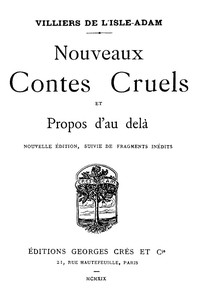
Nouveaux contes cruels et propos d'au delà by Villiers de L'Isle-Adam
Let's be clear: this isn't one long story. It's a collection of short tales and philosophical snippets. The 'contes cruels' (cruel tales) are the main event. They're like perfectly crafted traps. Each one sets up a situation—a desperate inventor, a cynical socialite, a man obsessed with an ideal—and then springs the catch, revealing the dark or ironic truth underneath.
The Story
There's no single plot. Instead, you get a series of vivid, sometimes unsettling scenarios. In one famous story, a wealthy man hires a famous actress to perform a play just for him, creating his own perfect, controlled reality. In another, an inventor's quest to build the ultimate machine leads to a shocking discovery about life and death. The 'propos d'au delà' (words from beyond) sections are shorter, more like poetic thoughts or dialogues that question reality, art, and existence itself. Think of it as walking through a gallery of strange and brilliant paintings, each with its own story to tell.
Why You Should Read It
I loved how these stories feel surprisingly modern. Villiers was writing in the 1880s, but his targets—blind faith in progress, the emptiness of high society, the lies we tell ourselves—are still relevant. His characters are often extreme, but you recognize their desires. The cruelty in the title isn't about gore; it's about the cold, logical way life (or the author) exposes our foolishness and vanity. It's witty and intellectual, but never dry. There's a real pleasure in watching his setups unfold, even when the ending makes you wince.
Final Verdict
This book is perfect for readers who love the eerie vibe of Edgar Allan Poe but want something with a more philosophical, European flavor. It's also a great pick for fans of dark satire or anyone curious about the weird side of 19th-century literature. Don't rush it. Savor a story or two at a time. It's not a comforting read, but it's a brilliant and bracing one that sticks with you.
No rights are reserved for this publication. Distribute this work to help spread literacy.





Lisa Jones
9 months agoGreat digital experience compared to other versions.