
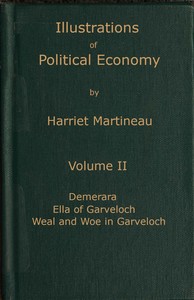
Illustrations of political economy, Volume 2 (of 9) by Harriet Martineau
Let's be clear: this isn't a novel with a single plot. Illustrations of Political Economy, Volume 2 is a collection of short tales, each one a thought experiment. Martineau takes a big economic idea—like the relationship between landlords and tenants, or what happens when a trade monopoly collapses—and builds a story around it. We meet farmers struggling to pay rent after a bad harvest, factory owners debating whether to cut wages, and communities figuring out how to support their poor. The 'plot' in each story is the push and pull of these economic forces on ordinary lives.
Why You Should Read It
First, it shatters the idea that old economic texts have to be boring. Martineau was writing for regular people, not professors. Her characters feel real—their worries about food, shelter, and fairness are timeless. Reading this, you see the human faces behind terms like 'corn laws' and 'market price.' Second, it's a fascinating look at how people argued about these issues as they were happening. This is the raw, hopeful, and sometimes flawed thinking of the Industrial Revolution era, served straight up. You get to walk alongside the thinkers of the day, seeing what solutions they proposed for a world changing at breakneck speed.
Final Verdict
This is a perfect pick for curious readers who love history or current affairs but hate textbook dryness. If you enjoy authors like Charles Dickens for his social commentary but wish he'd sometimes get more directly to the point, Martineau is your writer. It’s also great for anyone who likes seeing how ideas shape the world. Be ready for some 1830s attitudes, of course, but read it as a brilliant, accessible time capsule. You’ll come away with a much richer understanding of the arguments that built our modern world.
This text is dedicated to the public domain. You do not need permission to reproduce this work.
Kimberly Harris
1 year agoI was particularly interested in the case studies mentioned here, the language used is precise without being overly academic or confusing. This should be on the reading list of every serious professional.
John Miller
1 year agoLoved it.
Mason Martin
11 months agoAs someone who reads a lot, it challenges the reader's perspective in an intellectual way. A true masterpiece.
George Taylor
4 months agoMy first impression was quite positive because the historical context mentioned in the early chapters is quite enlightening. Top-tier content that deserves more recognition.