
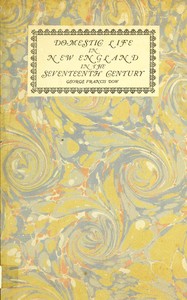
Domestic life in New England in the seventeenth century by George Francis Dow
Forget the Pilgrims and Plymouth Rock for a moment. George Francis Dow's book isn't about the big historical headlines. It's about the quiet, essential details that made up 99% of a settler's life in the 1600s. This isn't a narrative with a plot, but a rich, detailed reconstruction of a world.
The Story
Think of this book as a guided tour through a vanished New England village. Dow acts as your expert guide, using original documents as his map. He walks you through the construction of a timber-framed house, from the thatched roof to the clay-lined chimney. He shows you the contents of a typical home: the wooden trenchers they ate from, the wool cards for preparing yarn, the single precious book that might be a family's entire library. He explains the relentless cycle of work—planting, harvesting, cooking over an open hearth, making soap from ashes and fat. He also touches on the social rules, the simple forms of entertainment, and the ever-present challenges of sickness and isolation.
Why You Should Read It
What I love most about this book is how it makes history feel immediate and human. Reading a list of items from a 1685 estate inventory—"one iron pot, two wooden bowls, a spinning wheel"—suddenly paints a vivid picture of a real family's possessions and priorities. It strips away romantic notions and reveals the incredible resilience and practicality required just to get through the day. You gain a deep appreciation for the sheer amount of skill and labor embedded in every ordinary object, from a hand-forged nail to a homespun shirt. It's a powerful reminder of how much we take for granted.
Final Verdict
This book is perfect for anyone with curiosity about how people actually lived in the past. If you're a fan of historical fiction, this will be your ultimate behind-the-scenes reference. If you enjoy genealogy or local history, it will add incredible depth to your understanding of your ancestors' lives. It's also great for writers, reenactors, or anyone who visits living history museums and wants to know more. It’s not a breezy read—it’s packed with detail—but it’s endlessly rewarding. You'll never look at an antique tool or a old house the same way again.
The copyright for this book has expired, making it public property. It serves as a testament to our shared literary heritage.
Mary Miller
7 months agoI started reading this with a critical mind, the data points used to support the main thesis are quite robust. I’ll definitely be revisiting some of these chapters again soon.
Sarah Miller
5 months agoI particularly value the technical accuracy maintained throughout.
Linda Moore
9 months agoThis digital copy caught my eye due to its reputation, the clarity of the writing makes even the most dense sections readable. This adds significant depth to my understanding of the field.
Michelle Lewis
4 months agoGreat read!





Patricia Martinez
6 months agoHaving read the author's previous works, the language used is precise without being overly academic or confusing. The insights gained here are worth every minute of reading.